Tile Installation

Tile Installation in Virginia Beach and Hampton Roads

We set porcelain, ceramic and stone tile on floors, shower walls, tub surrounds and backsplashes. The work you do not see, a stiff floor, waterproofing and full mortar contact, is what keeps tile from cracking.

5.0
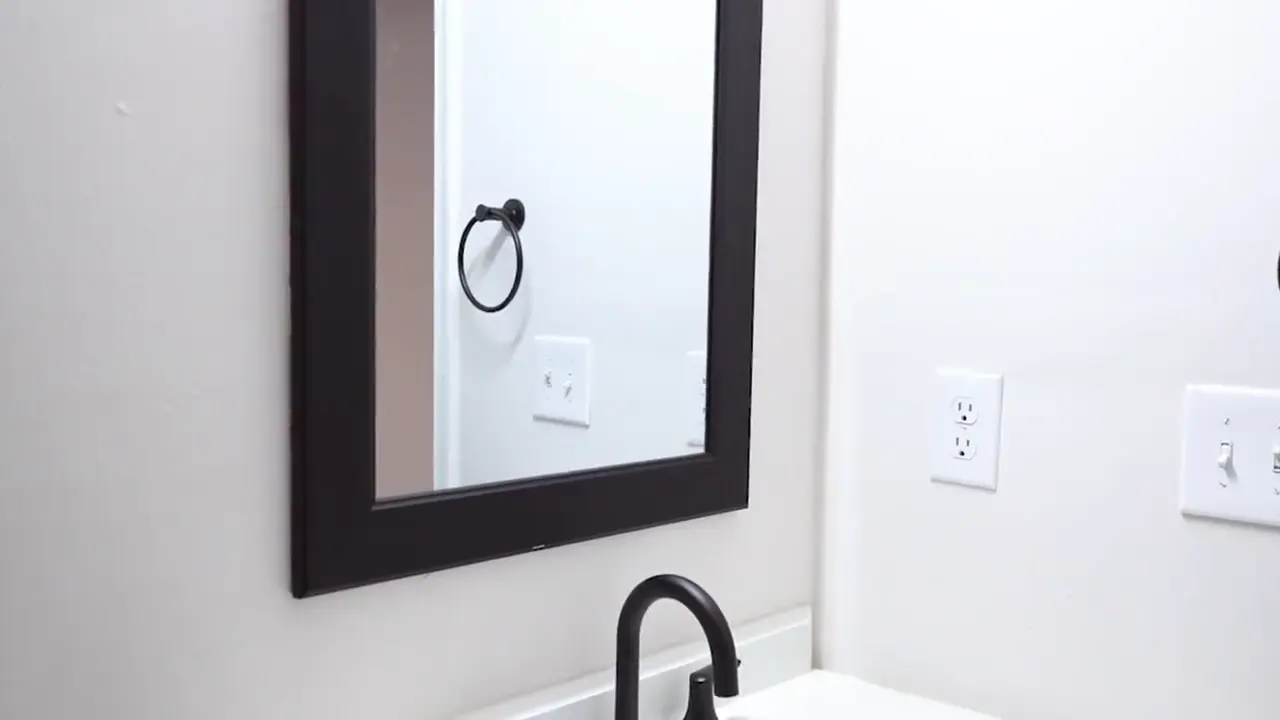
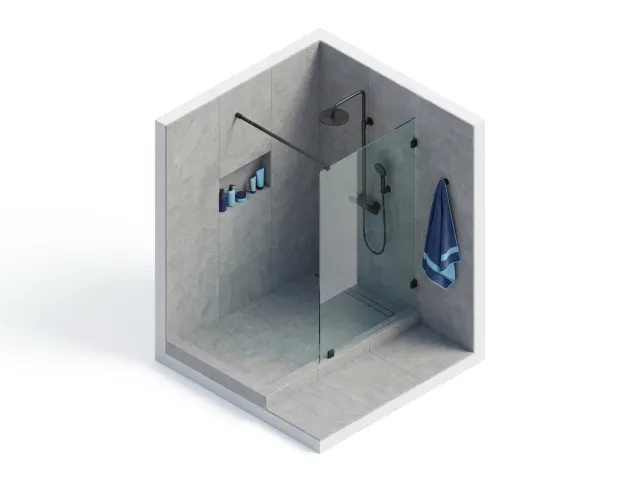
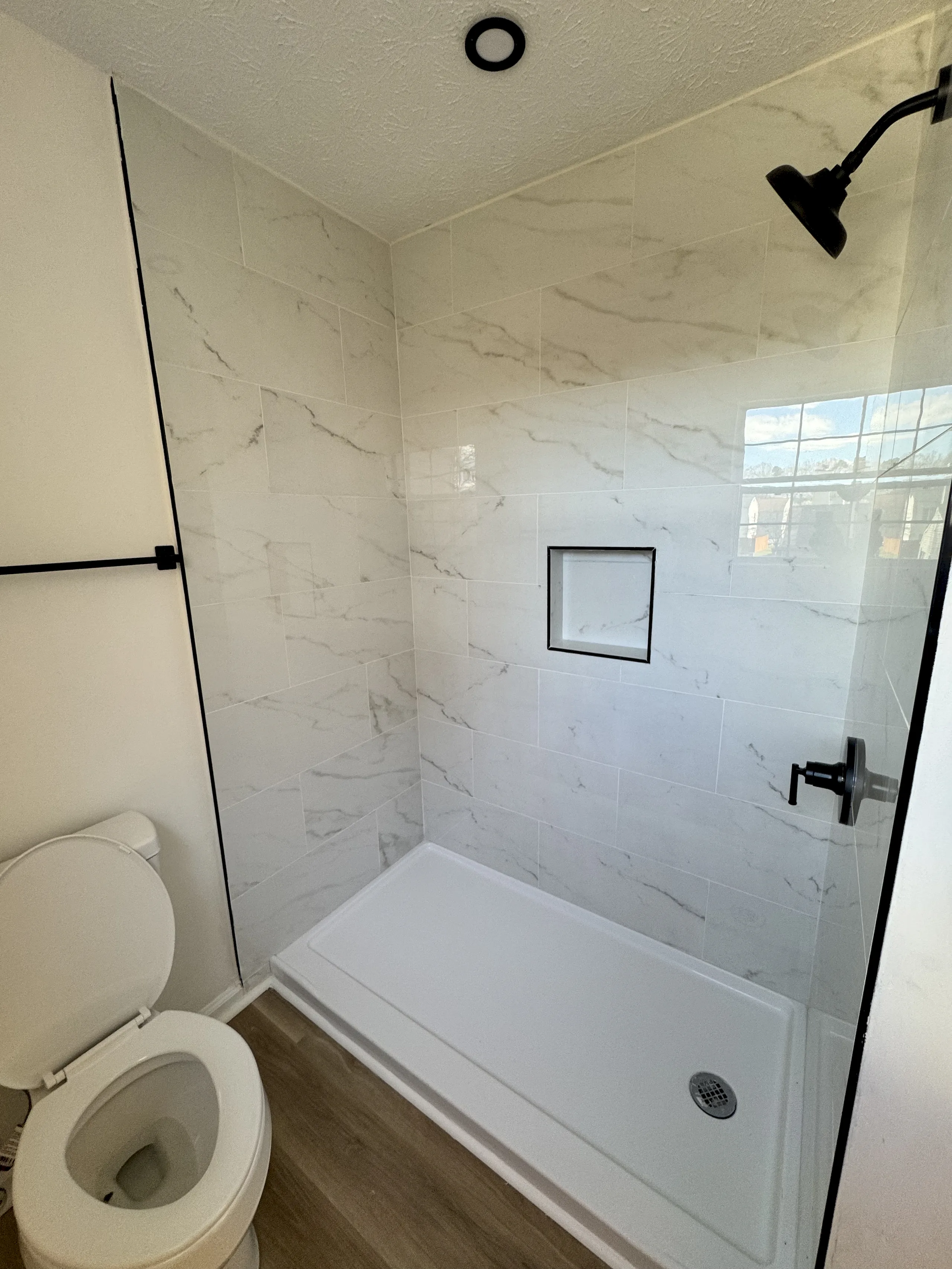
Walk-in shower with marble-look walls, a recessed niche and a glass panel
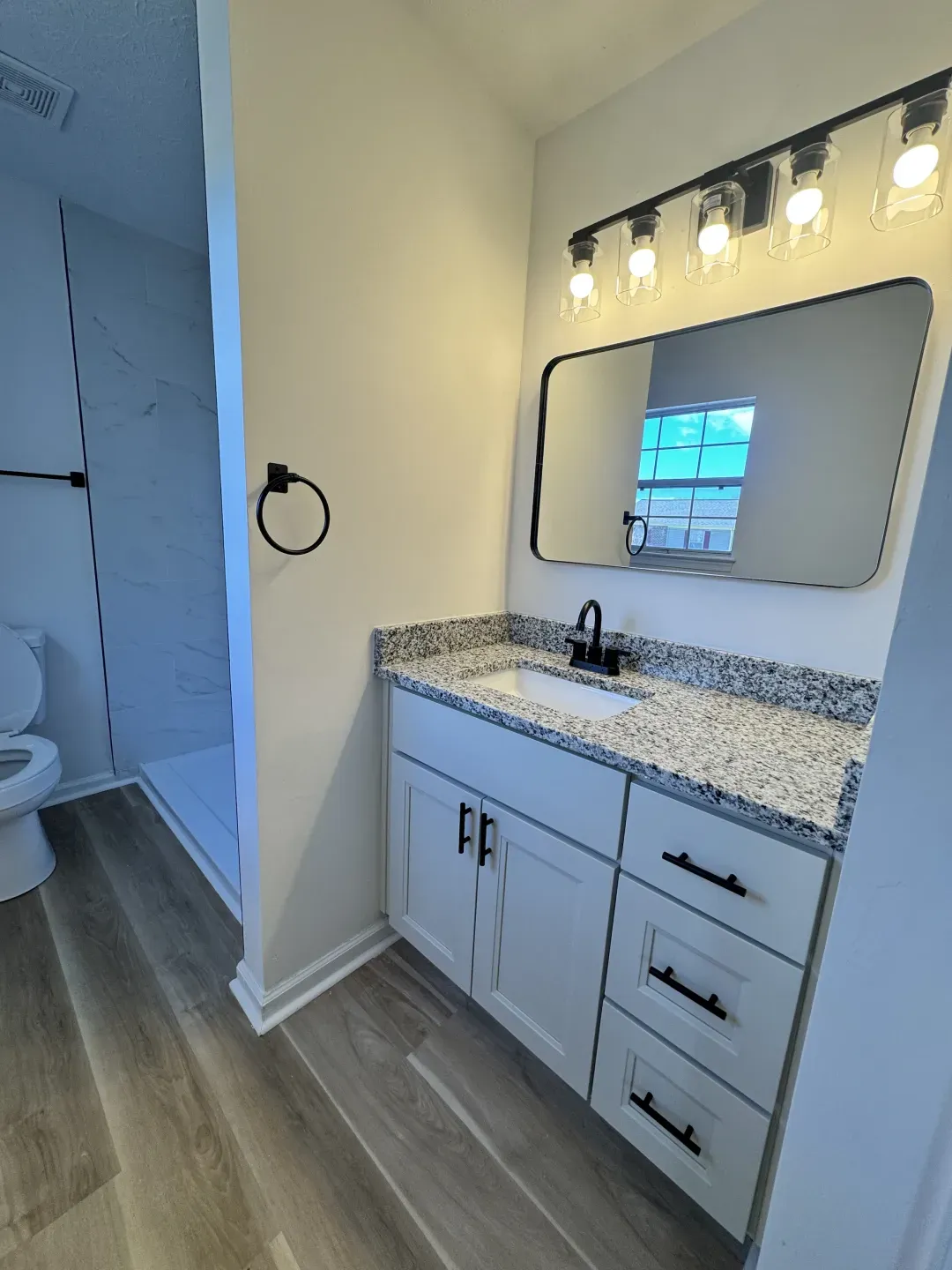
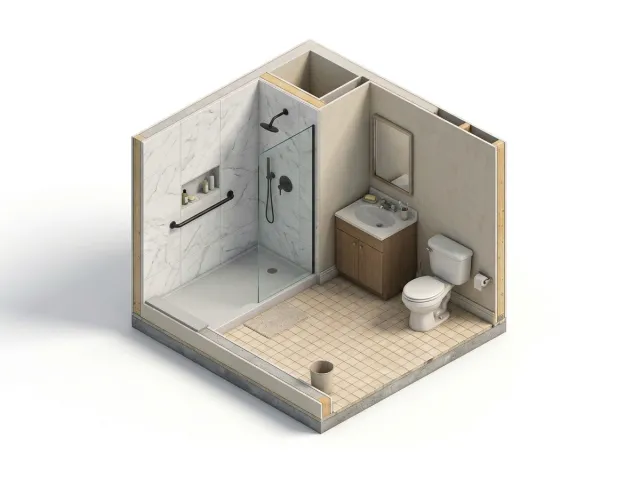
New bathroom vanity with granite top, black faucet, round mirror and light bar

Floors, showers, backsplashes

How it is built

What holds a tile floor together

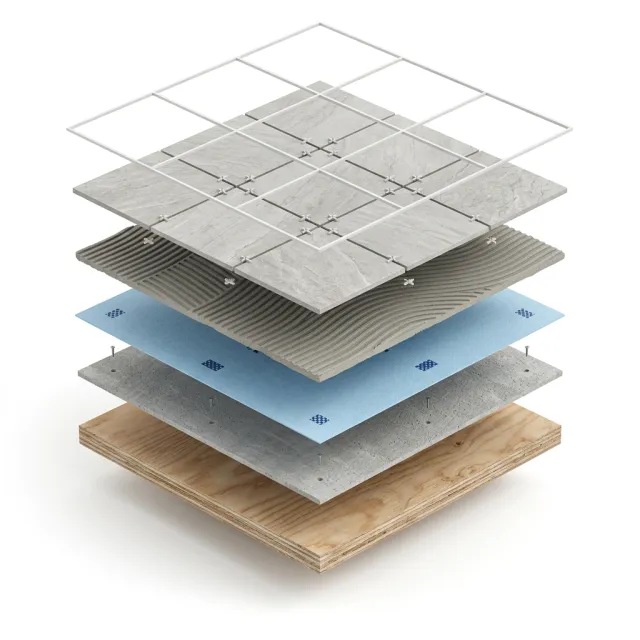
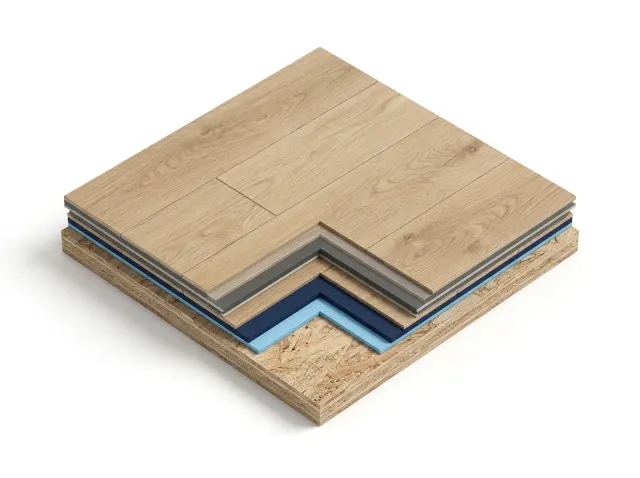
Tile does not bend, so everything under it has to stay still. These are the layers, from the bottom up.

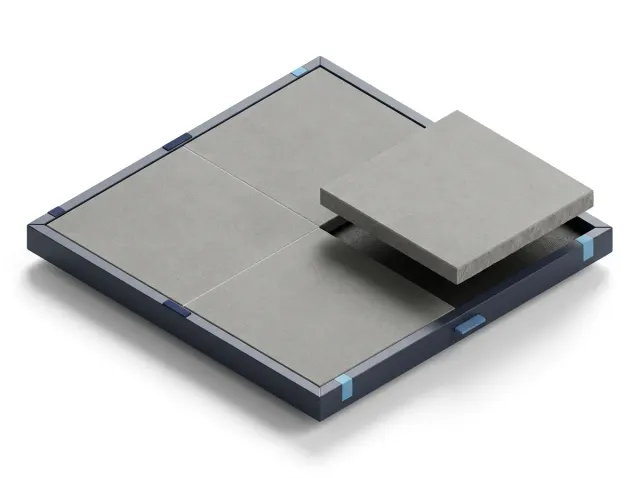
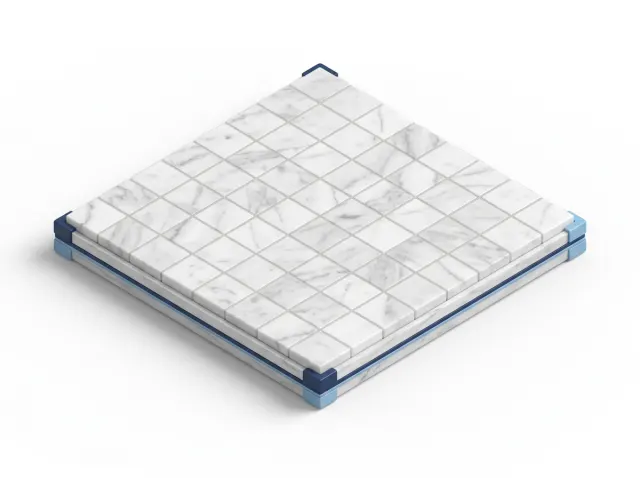
Illustration of a tile floor taken apart: plywood subfloor, cement backer board, blue waterproofing membrane, ridged mortar, grey porcelain tiles and a grid of grout Subfloor It has to be stiff. A floor that flexes cracks tile and grout, so we check the framing first. Backer board A cement board screwed down over the subfloor. Unlike wood, it does not swell when it gets wet. Membrane In wet rooms, a waterproof layer under the tile. It keeps water out of the floor and lets tile and subfloor move a little apart. Mortar Combed into ridges that flatten as the tile is pressed in, so the back of each tile is supported. Tile Set to a layout planned from the centre of the room, so cut pieces at the walls come out even. Grout Fills the joints and locks the tiles in place. The joint width is chosen to suit the tile.

Where we tile

Floors, showers and backsplashes

Three kinds of tile work, each with its own preparation.

Tile floors

Kitchens, bathrooms, entries and laundry rooms. The floor is checked for stiffness and flatness before any tile is set.

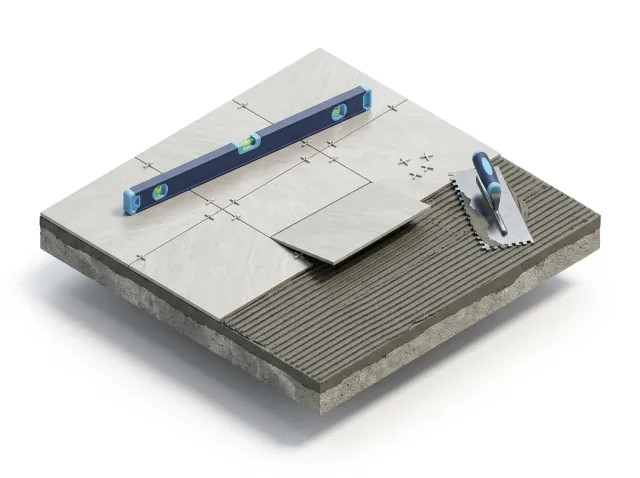
Illustration of large grey porcelain tiles being set over ridged mortar with spacers, a trowel and a level

What it includes

  • Old flooring removed
  • Backer board or membrane
  • Layout planned from the centre
  • Grout and sealed edges
Get Your Free Estimate

Showers and tub surrounds

The waterproofing behind the tile does the real work. Tile and grout alone do not stop water.

Illustration of a tiled walk-in shower with a glass panel

What it includes

  • Waterproof membrane on walls and floor
  • Floor sloped to the drain
  • Niches and benches
  • Flood test before tile where the system calls for it
Get Your Free Estimate

Kitchen backsplashes

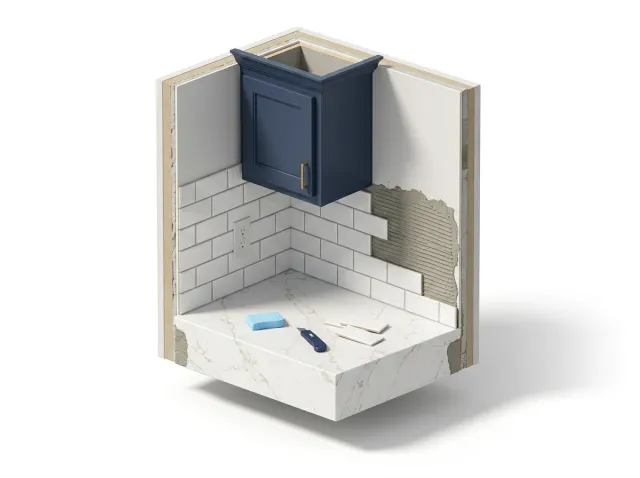
Tile between the countertop and the cabinets, cut neatly around outlets and windows.

Illustration of a white subway tile backsplash between a quartz countertop and a navy cabinet

What it includes

  • Wall prepared and flattened
  • Outlet cut-outs and extenders
  • Finished edges where the tile ends
  • Caulked joint at the countertop
Get Your Free Estimate

Layouts

Pick how the tile is laid

The same tile can look calm or busy depending on the layout. Pick one to see it on a floor.

Drawing, not to scale

Straight gridJoints line up in both directions. Clean and modern, and it shows every tile that is out of line, so the floor has to be flat.

For rectangular tile longer than about 15 inches, the tile standard limits the offset to one third.

Materials

Porcelain, ceramic or stone?

How the three most common tiles compare on what matters day to day. Longer bars are better.

  • Porcelain

    Dense and fired hot, so it absorbs almost no water. The all-round choice for floors and showers.

    Water
    Wear
    Easy care
  • Ceramic

    Lighter and easier to cut. Good for walls, backsplashes and floors with lighter traffic.

    Water
    Wear
    Easy care
  • Natural stone

    Marble, travertine and slate. Each piece is different, and it needs sealing to resist stains.

    Water
    Wear
    Easy care

A general guide. Ratings vary by product, and we check the one you choose.

What you do not see

Why tile jobs fail, and how we avoid it

Cracked tiles, hollow sounds and leaking showers almost always start under the surface.

  1. A floor that flexes

    Tile needs a stiff floor. We check the joists and add blocking or subfloor where the floor moves.

  2. Water behind the tile

    Showers get a continuous waterproof layer and a floor sloped a quarter inch per foot to the drain.

  3. Hollow spots

    Mortar has to touch at least 80 percent of each tile in dry rooms and 95 percent in wet ones. We lift tiles as we go to check.

  4. No room to move

    Soft joints at walls and changes of plane let the tile field expand without cracking.

Related

Rooms where tile does the most

Tile is usually part of a larger job. See how it fits.

All services

Grout

Three grouts, three levels of care

Grout is the part of a tile job you will clean. The kind you choose decides how much.

  • 01

    Cement grout

    The traditional choice. It needs sealing and re-sealing to resist stains.

  • 02

    High-performance cement

    Denser and more even in colour, and it resists stains without a sealer.

  • 03

    Epoxy

    Does not absorb water or stains. The strongest choice for showers and busy kitchens, and the hardest to install.

We tell you which grout suits the tile and the room before the job starts.

FAQ

Questions about tile

Can you tile over my existing tile?

Sometimes, if the old tile is solid, flat and well bonded and the extra height works at doors and appliances. In showers we take everything out so the waterproofing can be rebuilt.

Porcelain or ceramic for a bathroom floor?

Porcelain. It is denser and absorbs less water. Ceramic is a good choice for walls and backsplashes.

How long before I can walk on a new tile floor?

The mortar and the grout each need time to cure, and it depends on the products used. We tell you when the floor is ready for foot traffic and when the shower can be used.

Do large tiles need a special floor?

They need a flatter one. The larger the tile, the less it forgives dips and humps, so more preparation goes into the floor first.

Does grout need to be sealed?

Standard cement grout does. High-performance and epoxy grouts do not. We tell you which one you have and how to care for it.

Do you supply the tile?

We can, or you can choose it yourself. Either way we check the quantity, including the extra needed for cuts and spares.

Free in-home estimate

Planning a tile project?

Tell us the room and the tile you have in mind. We will check what is under it and give you a detailed estimate at no cost.