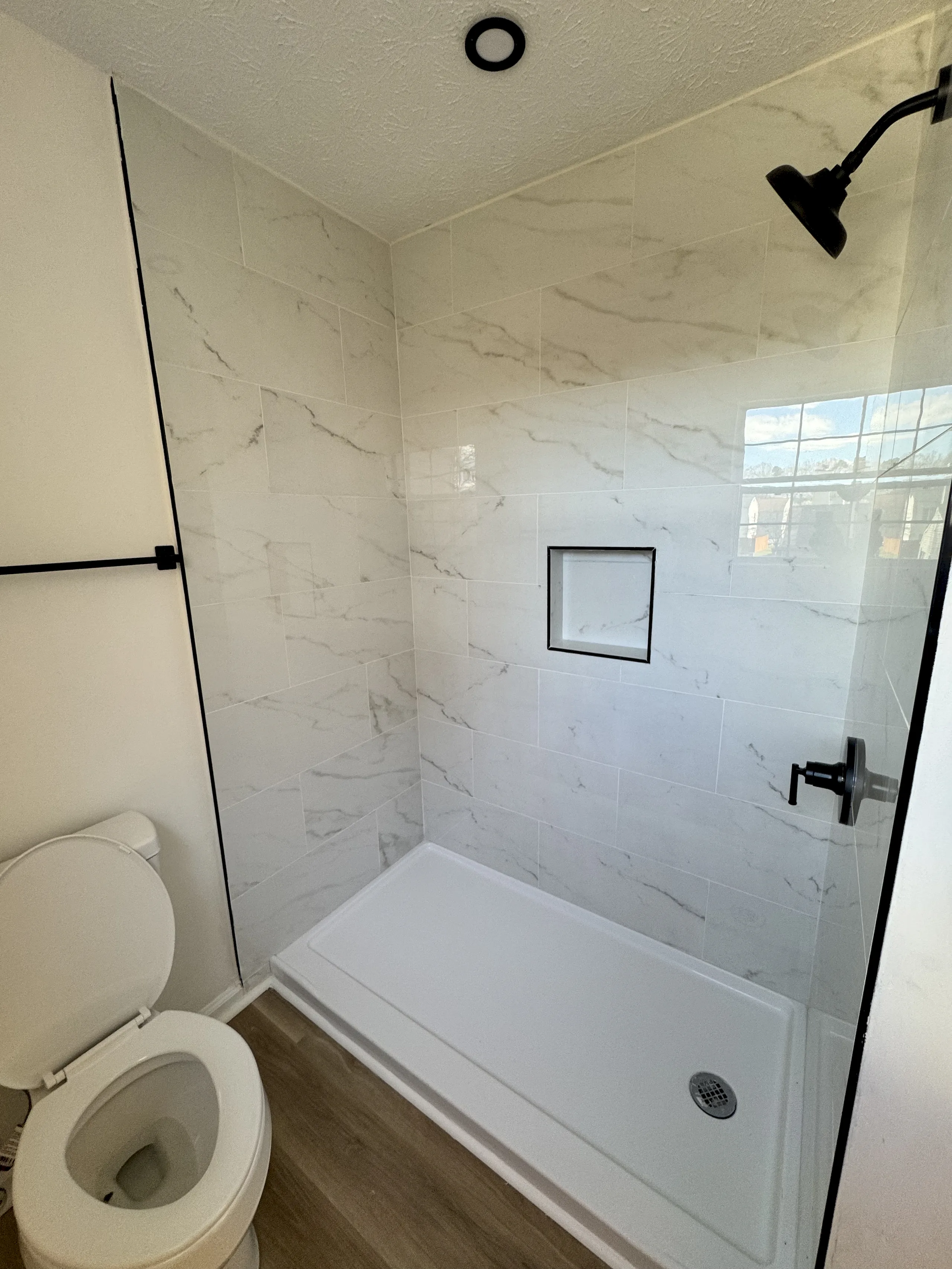
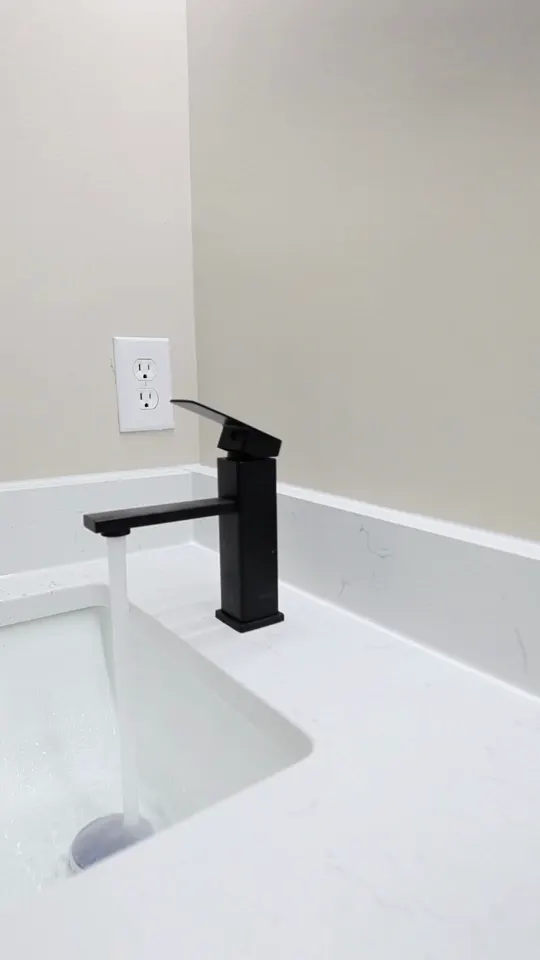
What a bathroom floor has to handle
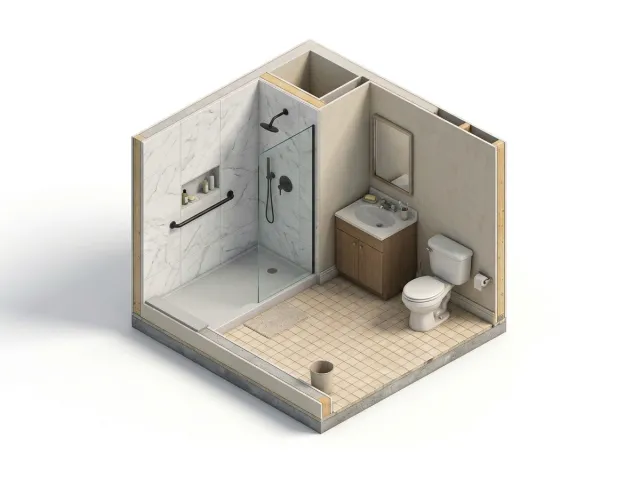
A bathroom floor gets wet every day, from the shower, the tub, the sink and wet feet. It also needs to be safe to walk on with bare feet and easy to keep clean. Four things decide which floor fits:
- Water. Whether the material itself is harmed by water, and how water reaches the subfloor through joints and edges.
- Slip. Small tiles with more grout lines and textured finishes grip better than large polished ones.
- Comfort. Tile and stone feel cold underfoot; vinyl plank feels warmer and softer.
- Care. Grout and natural stone need sealing; vinyl plank and porcelain with a stain-resistant grout need little.
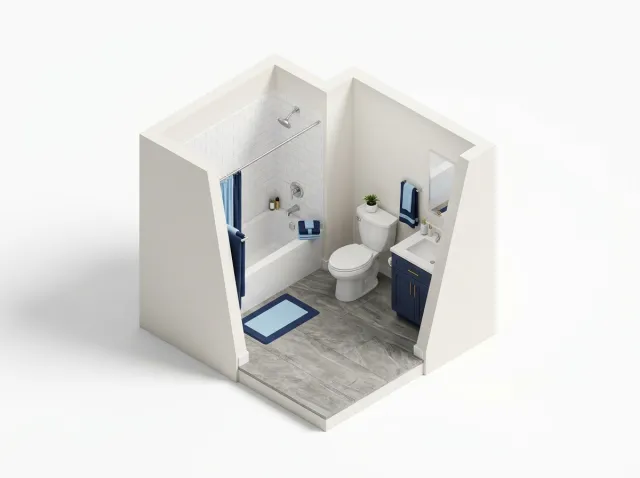
Porcelain tile: the strongest choice
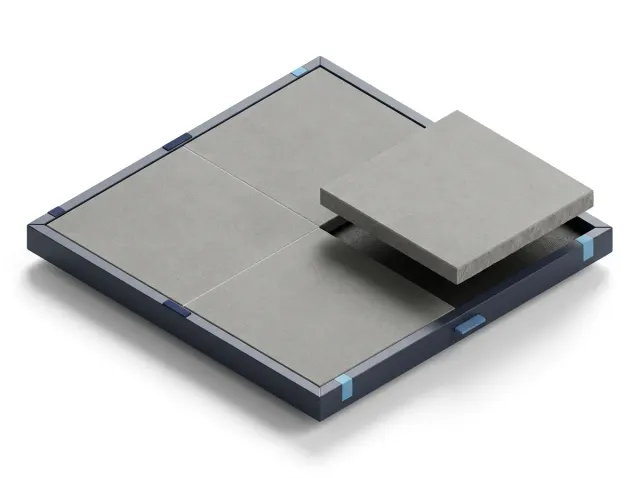
Porcelain is fired harder than ceramic, so it absorbs very little water and resists wear. It is the usual choice for shower floors, bathroom floors and anywhere water sits.
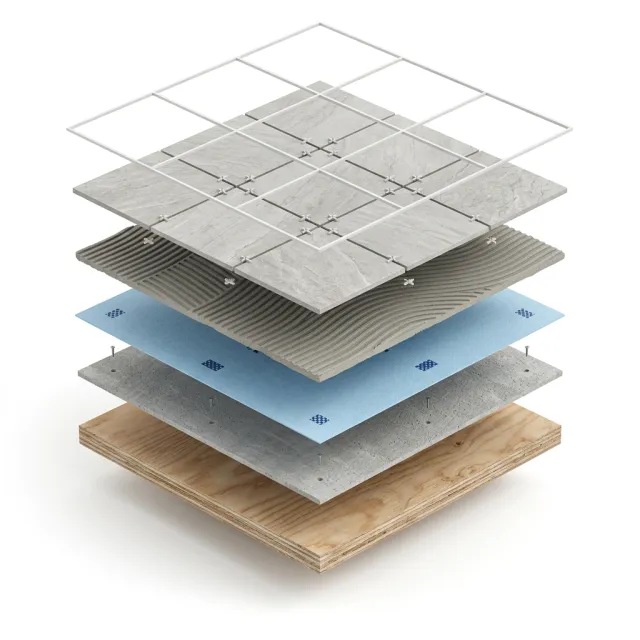
Its weak points are under it, not in it. In wet areas the tile standard calls for mortar to cover at least 95 percent of the back of each tile, so there are no hollow spots for water to collect,1 and a shower needs a waterproof layer behind the tile. A floor that flexes cracks tile and grout, so the subfloor has to be stiff.
Choose a matte or textured finish for the floor, and smaller tiles where you want more grip, such as the shower floor.
Luxury vinyl plank: warm, quick and water-resistant
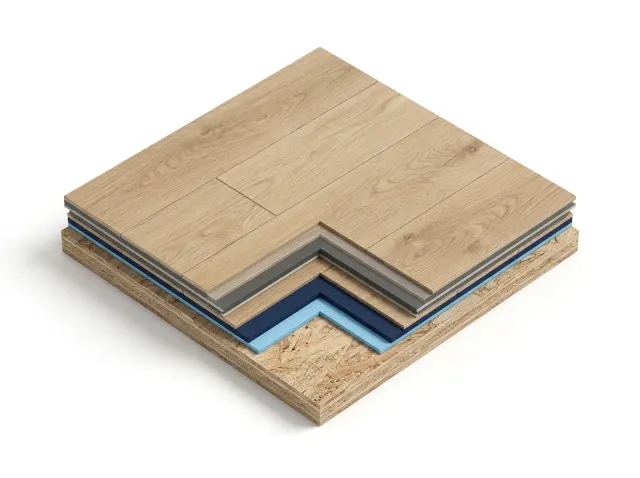
Vinyl plank has a printed wood or stone look over a waterproof core. It is warmer and softer than tile, quieter, and goes down faster, usually as a floating floor over the subfloor.
The plank itself stands up to water. Water can still reach the subfloor at the edges of a floating floor, so in a bathroom the edges at the tub and the toilet are sealed, and the subfloor is checked for moisture first. Tile is still the choice inside the shower itself.
See vinyl plank installation for the types of plank and what a good install is measured by.
Ceramic and natural stone
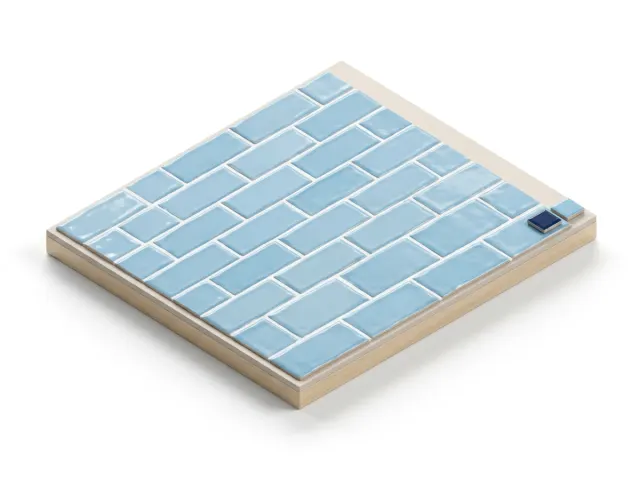
Ceramic tile is lighter and easier to cut than porcelain and absorbs more water. It works well on bathroom walls and on floors with lighter traffic.
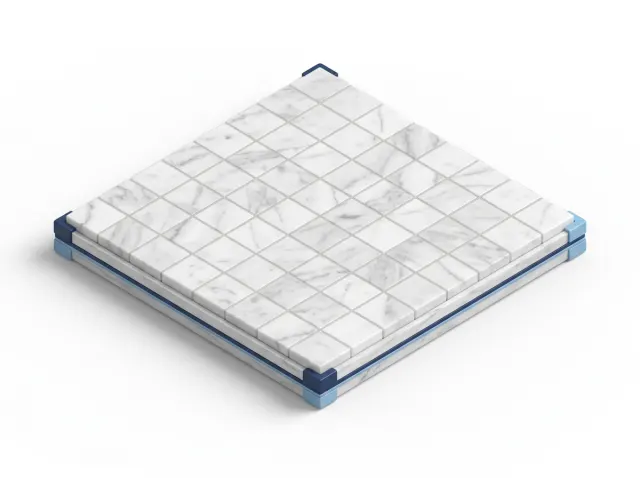
Natural stone such as marble, travertine and slate gives every floor its own pattern. It is more porous than porcelain, so it needs sealing, and some stones are slippery when polished. Mortar coverage for stone is held to the higher figure everywhere, wet or dry.1
Floors to avoid in a full bathroom
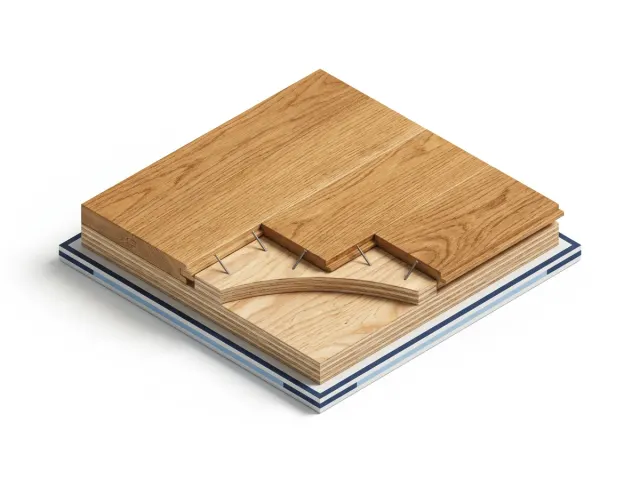
Solid hardwood swells and cups with standing water and humid air. The wood flooring industry's guidelines ask for indoor air kept between 30 and 50 percent relative humidity,2 which a full bathroom does not hold. Laminate has a wood-fiber core that swells if water gets into its joints. Both can work in a powder room with no shower or tub; neither belongs next to one.
Carpet holds moisture and is hard to keep clean around a toilet.
In Hampton Roads homes
Humid summers and homes on crawl spaces mean the subfloor under a bathroom is often the weak point. Before any new floor goes down we look for soft or stained wood around the toilet and the tub, and replace it. Homes on a concrete slab are checked for moisture coming up through the slab before vinyl plank goes over it.
Sources
- Never Assume You Have Sufficient Mortar Coverage. Check It., Ceramic Tile Foundation (on ANSI A108.5), read November 2026.
- Wood Flooring Installation Guidelines, National Wood Flooring Association, 2026.
Figures are the published averages and medians of these sources, not Cuevas Construction prices. Your project's cost comes from an in-home estimate.