Commercial Exterior

Commercial siding, gutters, windows and doors

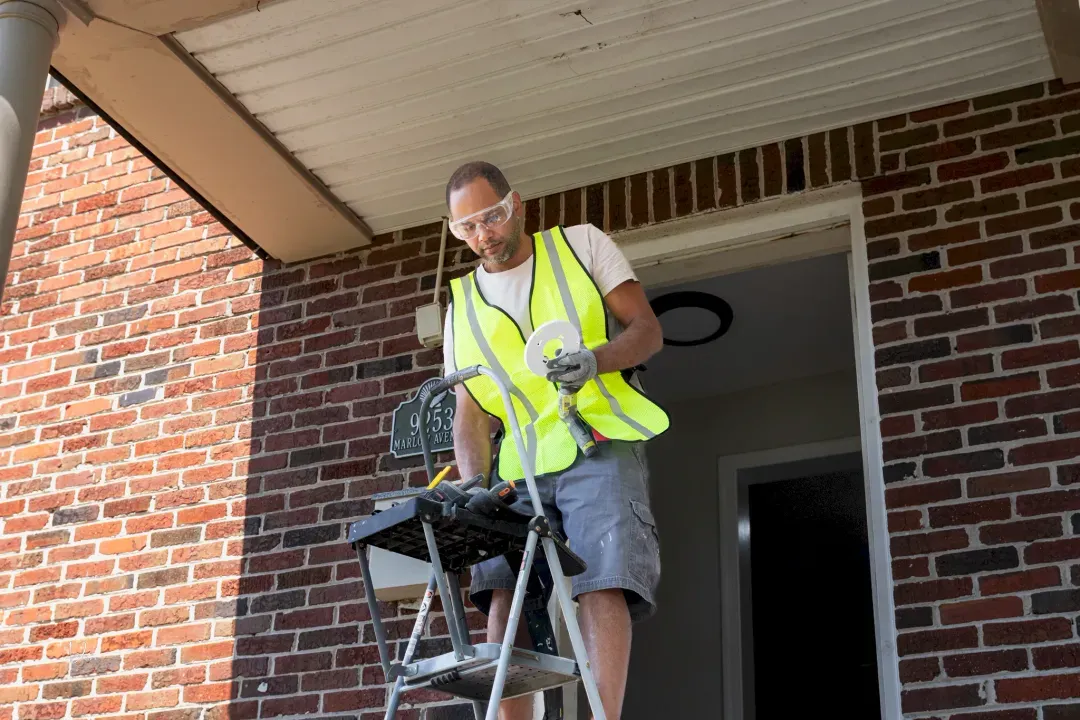
The outside of your building is the first thing a customer sees and the first thing the weather tests. We replace siding, gutters, fascia, windows and doors on commercial buildings.

How it is built

What keeps a wall dry

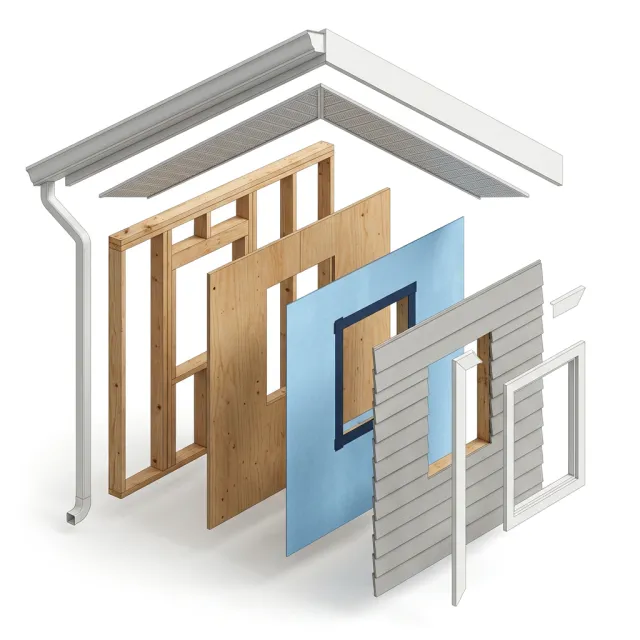
Siding is the part you see. The layers behind it and the gutter above it decide whether the wall stays dry.

Illustration of an exterior wall taken apart: framing, plywood sheathing, a blue water barrier, siding boards, white trim, soffit, fascia, gutter and downspout Framing and sheathing Studs covered with plywood or OSB. Any soft or rotted wood is replaced before the new layers go on. Water barrier and flashing A wrap over the sheathing, with flashing tape around every window and door, sends water that gets behind the siding back out. Siding Fiber cement, metal, vinyl or engineered wood, lapped so water runs down and off. Trim Corner boards and window and door trim close the edges where the siding stops. Fascia and soffit The fascia carries the gutter. Soffit panels close the underside of the eave, vented where the space behind needs air. Gutter and downspout Sized for the area that drains into it, sloped to the outlets, with downspouts that send water away from the foundation.

Services

Exterior work we take on

For shops, offices, restaurants and multi-unit buildings: one building or a whole row.

Commercial Siding, Gutters & Fascia

Faded, cracked or loose siding makes a business look closed. We strip it, repair what is underneath and install new siding, fascia, soffit and gutters as one job.
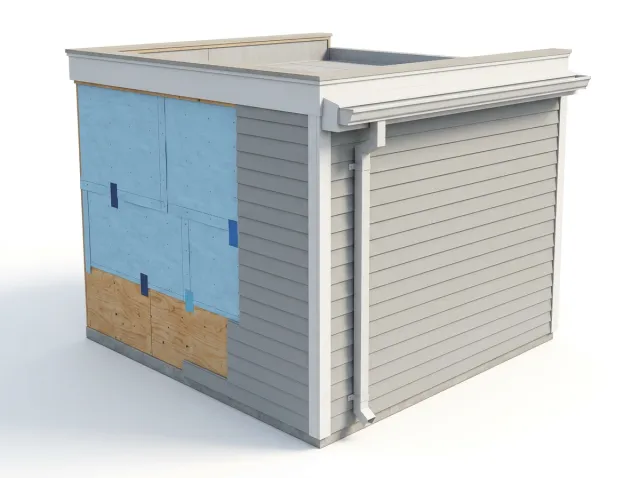
Illustration of a commercial building corner with new lap siding, white trim, a gutter and downspout, and one section still showing house wrap

What it includes

  • Siding removal and replacement
  • Sheathing and trim repairs
  • House wrap and flashing
  • Fascia and soffit
  • Gutters and downspouts sized for the building
Request an estimate

Commercial Windows & Doors

Storefront glass, entry doors and service doors are opened hundreds of times a day. We replace them with units built for that use.

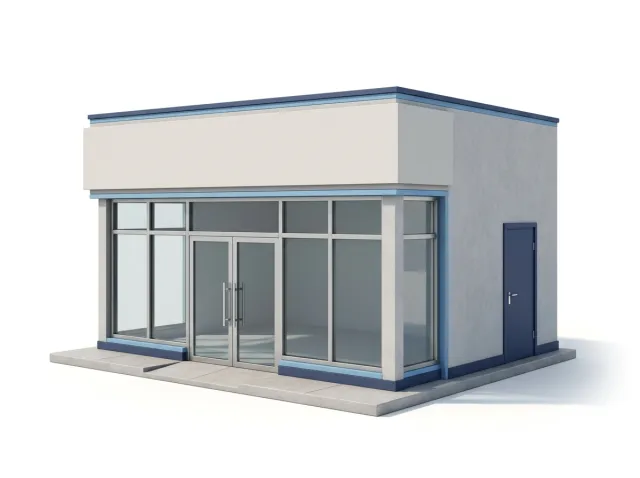
Illustration of a small storefront with aluminum-framed glass windows, glass entry doors and a steel side door

What it includes

  • Aluminum storefront windows
  • Glass entry doors and closers
  • Steel service and exit doors
  • Replacement windows for offices and units
  • Thresholds and hardware that meet accessibility rules
Request an estimate

How we work

Exterior work while you stay open

Your customers still need to find the door. We plan exterior work so the entrance and the parking stay usable.

  1. Entrances kept clear

    We work one side of the building at a time and keep a safe, marked way in.

  2. Property protected

    Walks, planting and parking near the wall are covered or cleared before work starts.

  3. Closed up every night

    No wall is left open. What we strip in a day is wrapped before we leave.

  4. A clean site

    Old siding and packaging leave the site as we go, not at the end.

Materials

Siding, gutters, windows and doors, compared

Commercial exteriors are chosen for wear, upkeep and fire rules as well as looks. Here is how the common options differ.

Siding

Illustration: fiber cement

Fiber cement

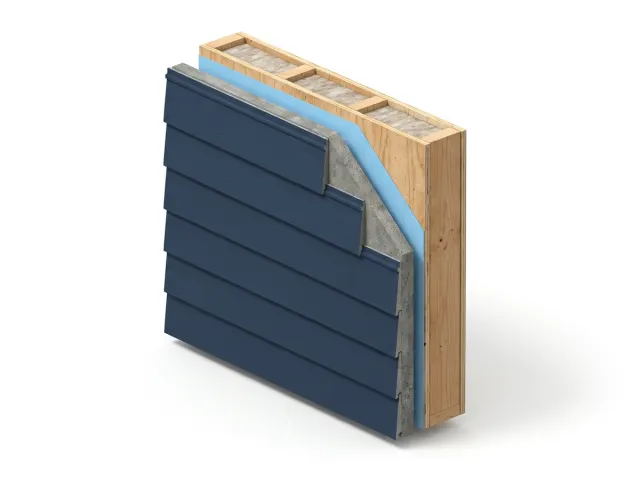
Boards and panels made of cement, sand and cellulose fiber, painted or factory finished.

Best forShops, offices and multi-unit buildings that want a painted look with little upkeep.

Weather
Does not rot, and holds up to sun, salt air and wind-driven rain.
Fire
It does not burn, which helps where buildings sit close together.
Good to know
It is heavy and is cut with dust control, so the install takes longer than vinyl.
Illustration: metal panels

Metal panels

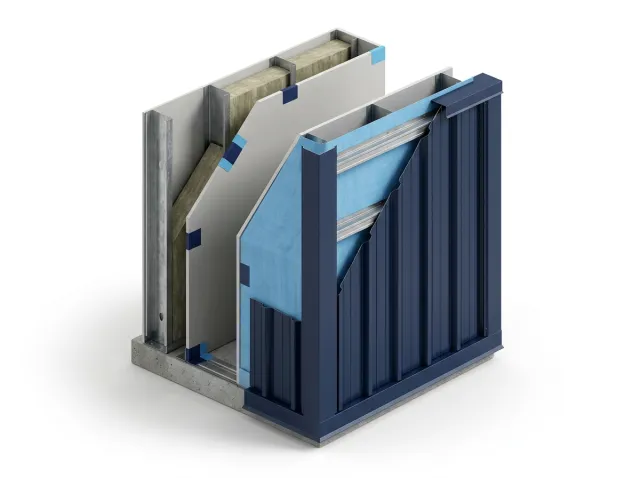
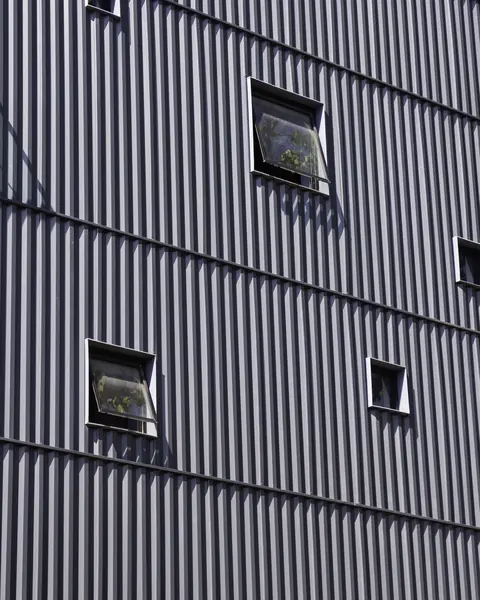
Ribbed or flat steel or aluminum panels with a factory paint finish.

Best forWarehouses, service buildings and modern storefronts.

Weather
Sheds water fast and does not rot. Near salt water, aluminum or a coating made for the coast resists corrosion better.
Upkeep
Wash it down. A dented panel is swapped rather than repaired.
Good to know
Panels are ordered to length, so measuring comes before the order.
Illustration: vinyl siding

Vinyl siding

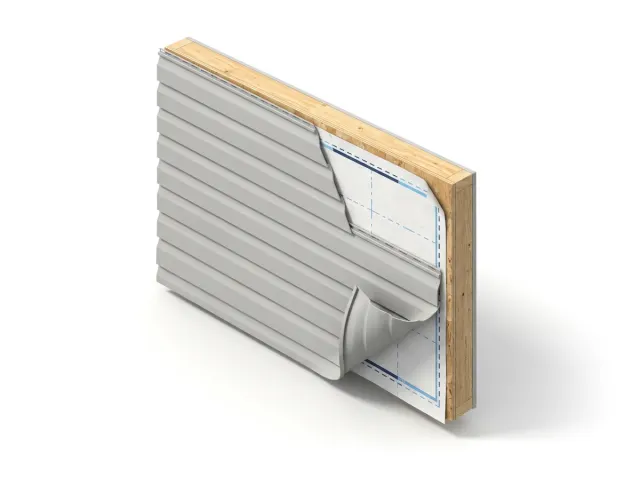
PVC panels that lock together and hang from nails so they can move with the heat.

Best forSmall commercial buildings and multi-unit housing on a tight budget.

Weather
Does not rot or need paint. It can crack under impact in cold weather.
Upkeep
Wash it when it looks dirty.
Good to know
Some building types and fire rules limit where vinyl can go. We check before you choose.

Gutters

Illustration: six-inch k-style gutter

Six-inch K-style gutter

A larger version of the gutter on most houses, in seamless aluminum.

Best forSmall commercial buildings with pitched eaves.

Capacity
Carries more water than a five-inch gutter, with bigger downspouts to match.
Upkeep
Cleaned like any gutter. Guards cut down how often.
Good to know
Formed on site in one piece per run, so there are no seams along its length.
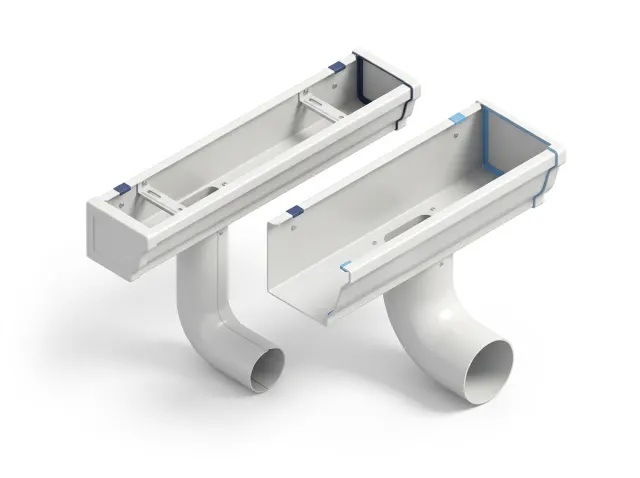
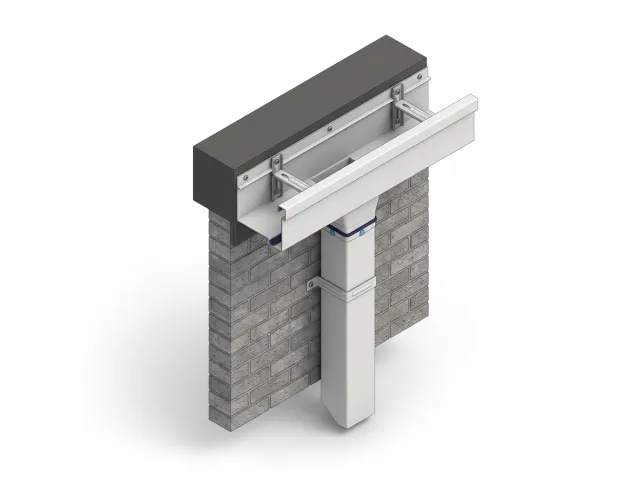
Illustration: box gutter

Box gutter

A deep rectangular gutter with large square downspouts, made for big drainage areas.

Best forLarger buildings and long eaves that shed a lot of water at once.

Capacity
Sized from the area that drains into it and the local rainfall, not from a standard profile.
Upkeep
Needs clear outlets. A blocked box gutter holds a lot of water.
Good to know
Heavier than a house gutter, so the fascia and hangers have to be solid.

Windows and doors

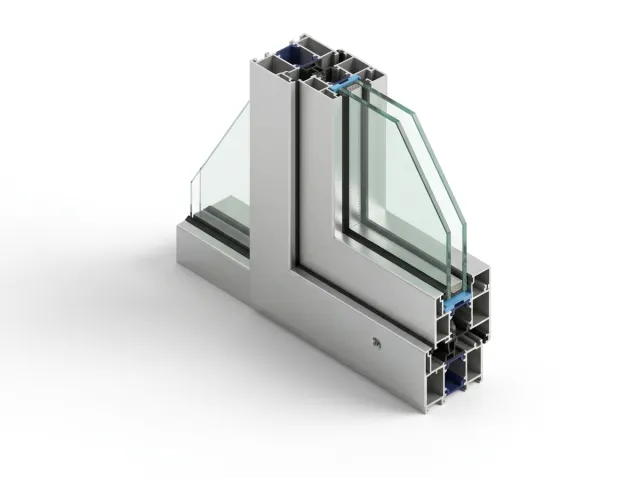
Illustration: aluminum storefront

Aluminum storefront

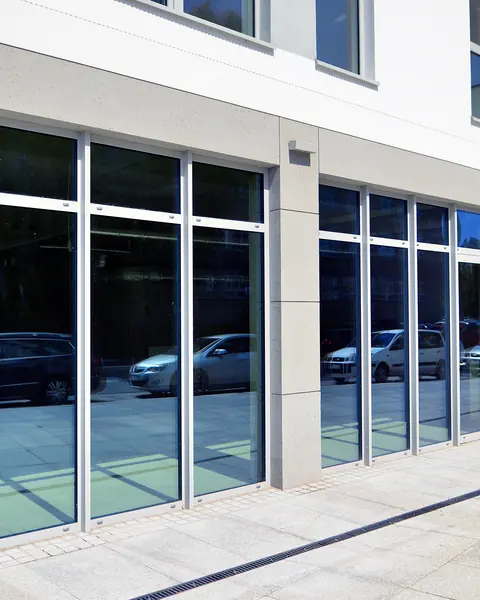
Slim aluminum frames holding large panes of insulated glass, built up on site into a wall of glass.

Best forShop fronts, lobbies and ground-floor offices.

Glass
Insulated, low-E glass cuts heat and glare. Glass near doors and the floor is safety glass.
Wind
On the coast, frames and glass are chosen for the wind pressure the code sets for the site.
Good to know
Glass is made to size after the opening is measured, so there is a wait between order and install.
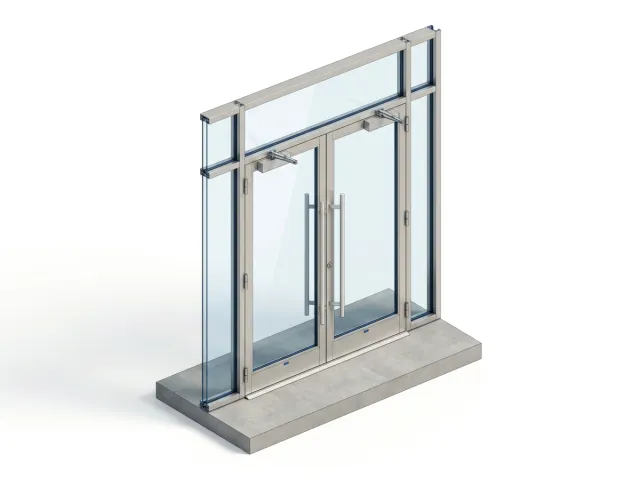
Illustration: glass entrance doors

Glass entrance doors

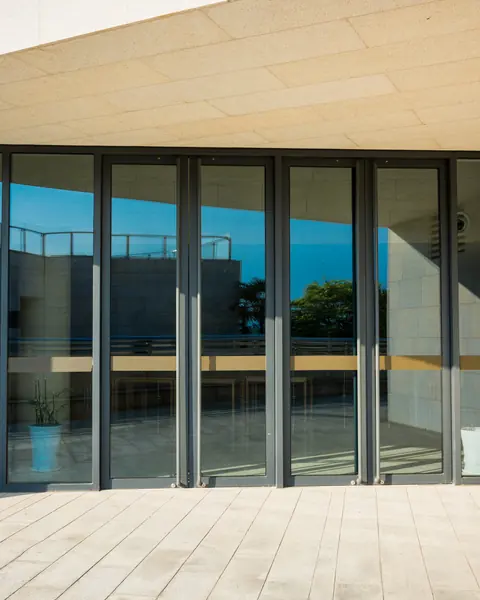
Aluminum-framed glass doors, single or in pairs, with a closer and pull handles.

Best forMain customer entrances.

Access
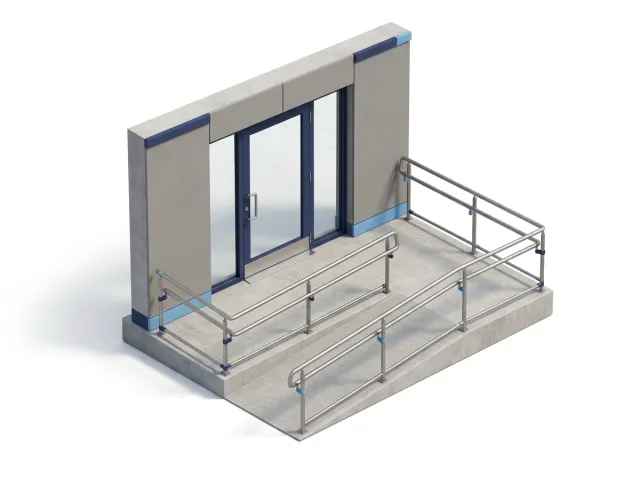
A clear opening of at least 32 inches and a threshold no higher than half an inch.
Hardware
The closer is adjusted so the door is not too heavy to open and does not slam.
Good to know
Entry doors are also exits. Their locks and hardware have to let people out without a key.
Illustration: steel service doors

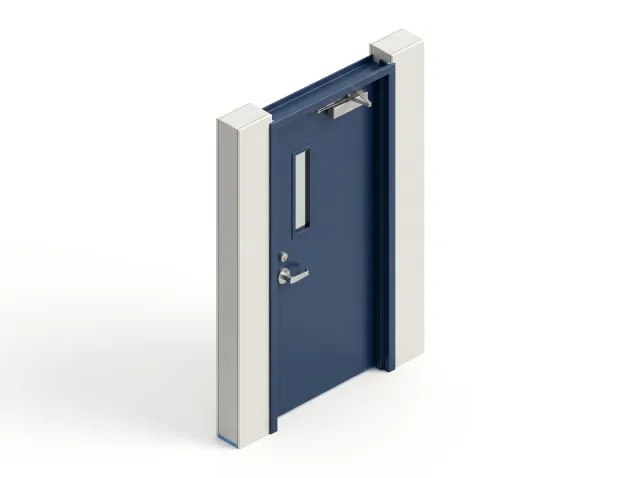
Steel service doors

Hollow metal doors in steel frames, for back and side entrances.

Best forRear exits, stock rooms and utility rooms.

Security
Steel doors and frames resist forced entry better than wood.
Fire
Where a fire-rated door is required, the door, frame and hardware all carry a label.
Good to know
Bottoms rust first near the coast. Galvanized doors and a proper threshold slow that down.

Not sure which one fits your space? We go over the options and bring samples to the site visit.

Request an estimate

Process

How an exterior job runs

You know what comes next at every step.

  1. Site visit

    We walk the space with you, measure it and look at what is behind the walls and above the ceiling.

  2. Scope and estimate

    You get a written scope and a detailed estimate. If the job needs drawings or a permit, we tell you at this point.

  3. Schedule

    We agree on the dates, the working hours and which areas stay open before any work starts.

  4. Build

    One crew does the work, with one person keeping you up to date.

  5. Walkthrough

    We walk the finished space with you and take care of anything on the list.

FAQ

Common questions

About commercial exterior work in Hampton Roads.

Can you replace siding while the business stays open?

Yes. We work one side of the building at a time and keep the entrance open and marked.

What siding holds up near the coast?

Fiber cement and coated aluminum hold up well to salt air and sun. Plain steel needs a coating made for coastal use.

How are commercial gutters sized?

From the area that drains to each run and the local rainfall. Bigger areas need deeper gutters and more or larger downspouts.

Do you install storefront glass and doors?

Yes: aluminum storefront frames, insulated glass, glass entry doors and steel service doors.

Do exterior changes need a permit?

Replacing siding, windows or doors on a commercial building usually needs a permit, and some districts have design rules for what faces the street. We check with the city before work starts.

Which areas do you cover?

Virginia Beach, Norfolk, Chesapeake, Portsmouth, Suffolk, Hampton and Newport News.

Commercial

More commercial work

The same crew takes on the rest of the building.

All commercial services

Commercial projects

Time to redo the outside of your building?

Tell us about the building and what is wearing out. We will visit, measure and send a detailed estimate.