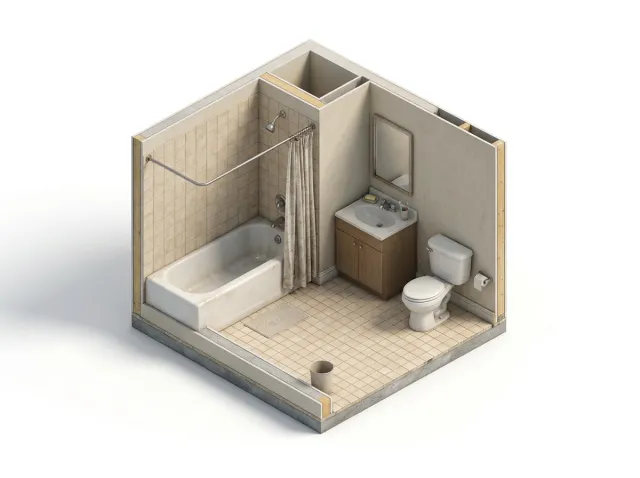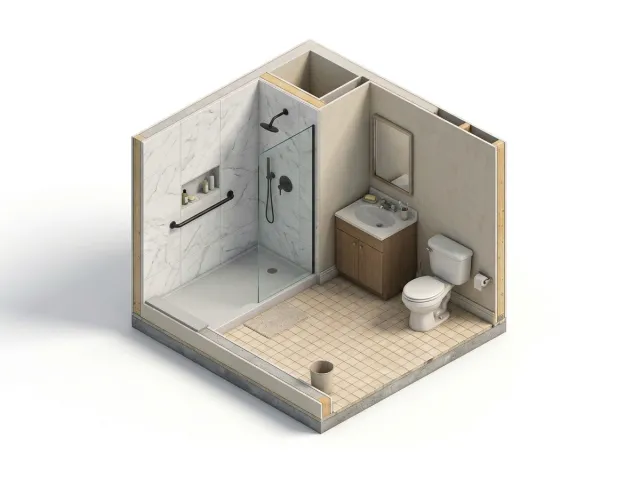
Start with how you use the bathroom
The right answer is about the people who use the room, not the room. Ask:
- Does anyone take baths, or bathe small children here?
- Is stepping over a tub wall getting harder for someone in the house, or will it soon?
- Is this the only bathroom with a tub?
- Do you plan to stay in the house, or sell in the next few years?
Why people choose a walk-in shower
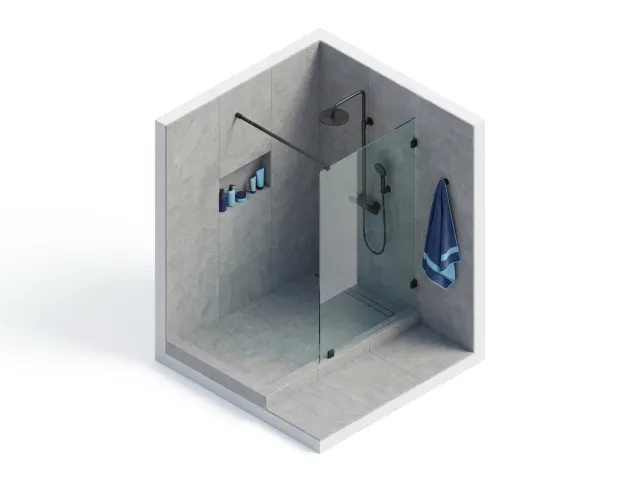
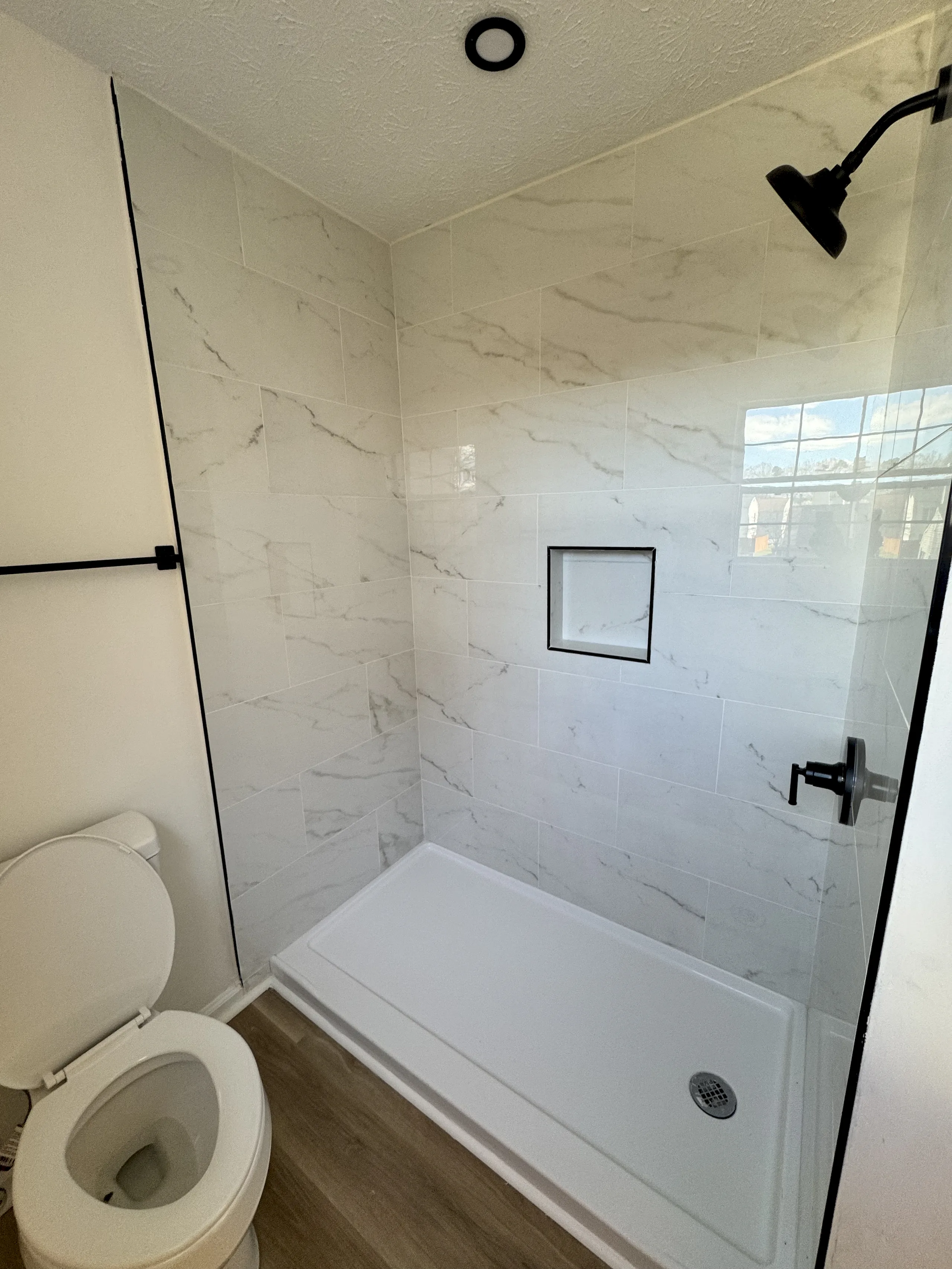
- Easier and safer to step into. A low curb, or no curb at all, instead of a tub wall to climb over. Grab bars and a bench fit naturally.
- Easier to clean. Large tiles or panels and a glass panel instead of a tub, a curtain and its corners.
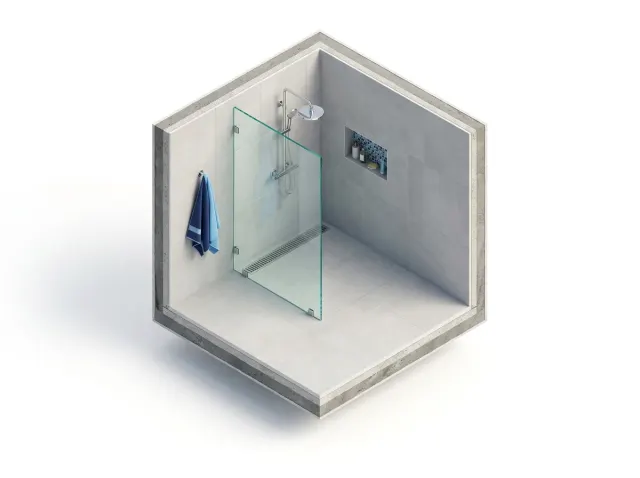
- More open. Clear glass lets the eye run to the back wall, so a small bathroom feels bigger.
- Room for what you want. A wider shower, a niche for bottles, a hand shower on a slide bar.
The building code sets a minimum: a shower at least 30 inches across with at least 900 square inches of floor.1 A walk-in shower that replaces a standard tub usually has far more than that.
When to keep the tub
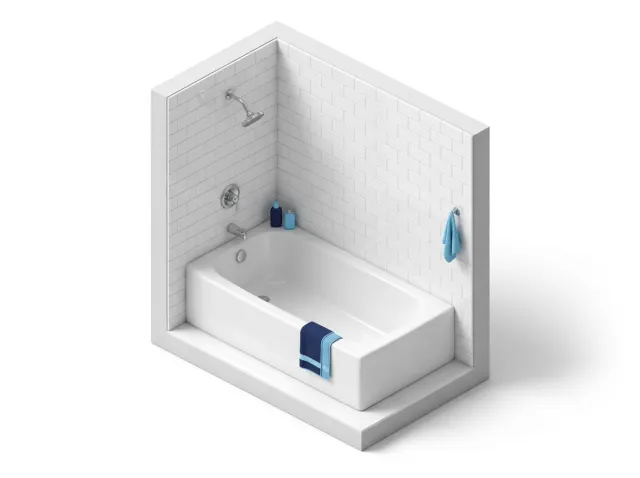
- Young children. Bathing small kids is easier in a tub.
- Soaking. If a bath is how you unwind, you will miss it.
- Resale. In the National Association of Home Builders' 2024 buyer survey, having both a shower and a tub was among the top-rated bathroom features, rated highly by 78% of buyers.4 In its earlier survey, 27% of buyers said they did not want a primary bath with only a shower stall.5 If this bathroom has the only tub in the house, think twice before removing it.
- Space for both. In a larger primary bathroom, a separate shower and a freestanding tub give you both.
What the change involves
Angi puts the 2026 national average cost to install a walk-in shower at $9,000, with most homeowners spending $6,000 to $12,000.2 In the 2026 Houzz Bathroom Trends Study, a tub was removed in 26% of bathroom projects, and 79% of those homeowners used the space for a bigger shower.3
Replacing a tub with a walk-in shower in the same spot is usually the simplest version: the drain stays close to where it is. The old tub and surround come out, the floor is checked and repaired, the drain and the valve are adjusted, a waterproof shower is built and tiled, and glass goes on last. Moving the shower to another wall means more plumbing work in the floor.
A curbless entry needs the floor lowered or built up so water stays in the shower, which adds work under the floor.
Sources
- 2021 International Residential Code, Chapter 27, Section P2708 Showers (adopted in the Virginia Residential Code), International Code Council, 2021.
- How Much Does a Walk-In Shower Cost? (2026 Data), Angi, updated October 30, 2026.
- 2026 U.S. Houzz Bathroom Trends Study, Houzz Research, September 30, 2026.
- Home Buyers Are Looking for Amenity-Loaded Kitchens and Bathrooms (What Home Buyers Really Want, 2024), NAHB Eye On Housing, September 10, 2024.
- In the Bath, First-Time Buyers Really Want Both a Shower & Tub, NAHB Eye On Housing, March 30, 2022.
Figures are the published averages and medians of these sources, not Cuevas Construction prices. Your project's cost comes from an in-home estimate.