
Are gutter guards worth it? For many Hampton Roads homes with trees close to the roof, yes. Guards cut down on clogs and ladder trips. No type removes upkeep completely, and the right one depends on what falls on your roof: oak leaves, pine needles or fine roof grit.
This guide compares the common guard types and the upkeep each one still needs. When you want a straight answer for your own home, our team handles gutter and gutter guard installation across Virginia Beach, Norfolk, Chesapeake, Portsmouth, Suffolk, Hampton and Newport News. Request a Free In-Home Estimate.
Are gutter guards worth it for Hampton Roads homes?
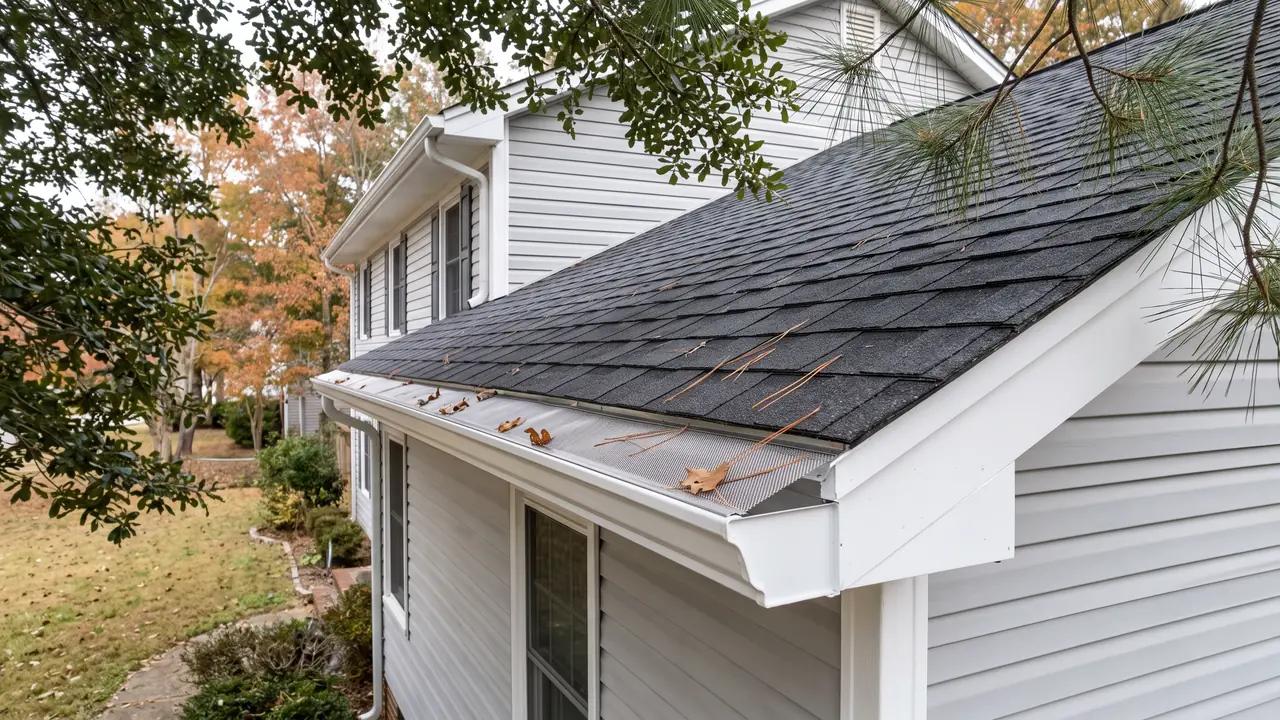
Guards make the most sense when trees hang over or stand near your roof. If you climb a ladder to clear gutters every few months, guards can save you many of those trips. If your home sits under mostly open sky, standard gutters with an occasional cleaning may be enough.
A guard also cannot fix a gutter that is too small. The U.S. Department of Energy's Building Science Education site says to "install appropriately sized gutters and downspouts." Undersized gutters overflow in heavy rain, with or without a guard on top.
Cost is the other half of the question. It depends on the length of your roofline and the type of guard. That is why we measure your home before we give you a number.
Why do fall leaves matter so much for gutters here?
Leaf season is not over yet in eastern Virginia. In its October 29, 2026 weekly fall foliage report, the Virginia Department of Forestry said forest-grown oaks are still green in much of the state. It said oak color is still to come "from the lower mountains to the Piedmont and Coastal Plain." The same page lists oaks as a "Late" tree for fall color.
Pines matter too. The Department of Forestry's forest composition page says loblolly pine and yellow-poplar are the most common trees in Virginia by volume. That is a statewide figure, not a count for Hampton Roads. If pines grow near your home, their needles are small enough to slip past some guards.
Our page on gutter installation in Virginia Beach names oak leaves and Spanish moss among the things that clog gutters there. So the type of tree over your roof shapes which guard will work.
What types of gutter guards are there, and how do they compare?
This Old House groups gutter guards into six styles: brush, foam insert, mesh screen, micro mesh, PVC cover and reverse curve. Each one stops debris in a different way. The table below sums up what This Old House and Family Handyman report. We left out prices, because your cost depends on your home.
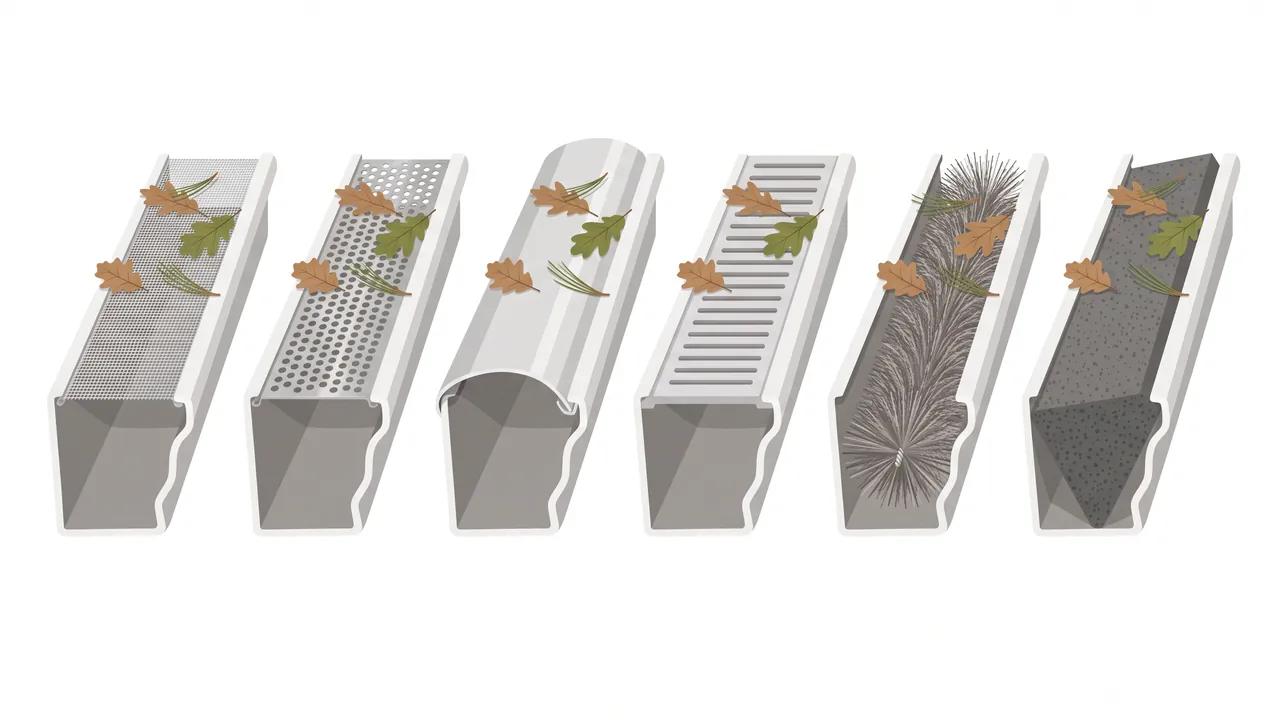
Family Handyman makes the same point about foam. It says sunlight and harsh weather can break the foam down over time.
Which gutter guard handles oak leaves and pine needles?
Start with the trees over your roof. Then match the guard to the debris they drop.
- Mostly oak leaves and other broad leaves: most guard types stop large leaves. This Old House describes mesh screens, reverse curve covers and PVC covers as built for larger debris.
- Pine needles and roof grit: This Old House calls micro mesh "ideal for filtering out fine particles like roof grit and pine needles." It says standard mesh screens are weak on pine needles.
- A mix of both: This Old House found micro mesh blocks debris of all sizes. The trade-off is a careful, precise install.
The sources do not agree on everything. This Old House also rates brush guards highly for pine needles. Yet the same review says brush guards need regular maintenance and can mat in wet regions. So there is no single winner. The right pick depends on your trees, your roof and how much rain your gutters carry.
Do you still need to clean gutters with gutter guards?
Yes, but less often. This Old House says guards "help reduce gutter maintenance, but they don't eliminate it entirely." Debris can still pile up on top of a guard and keep water out.
Plan a quick check after rough weather. This Old House recommends gutter inspections after severe weather events. Family Handyman suggests checking guards after heavy storms.
A few simple habits help:
- Watch your gutters from the ground during a heavy rain. Water spilling over the edge means it is not getting through.
- Clear leaves that collect on top of the guard.
- Make sure each downspout still runs freely at the bottom.
What happens when clogged gutters overflow near the foundation?
When a gutter clogs, water goes over the edge and lands next to your house. The Department of Energy's Building Science Education site explains the risk. Roof water "can rapidly saturate the soil surrounding the building and wick through the foundation to the interior." It links that to mold and rot, indoor air quality and building durability problems.
Where should the water go instead? Two public sources give a distance:
- The Department of Energy site says to pipe downspout water to a sloping grade more than 5 feet from the foundation.
- Virginia Cooperative Extension fact sheet SPES-9 shows a downspout extension photographed by a Virginia Beach Master Gardener Water Steward. Its caption says to direct the runoff 10 feet away from the foundation and into the landscape.
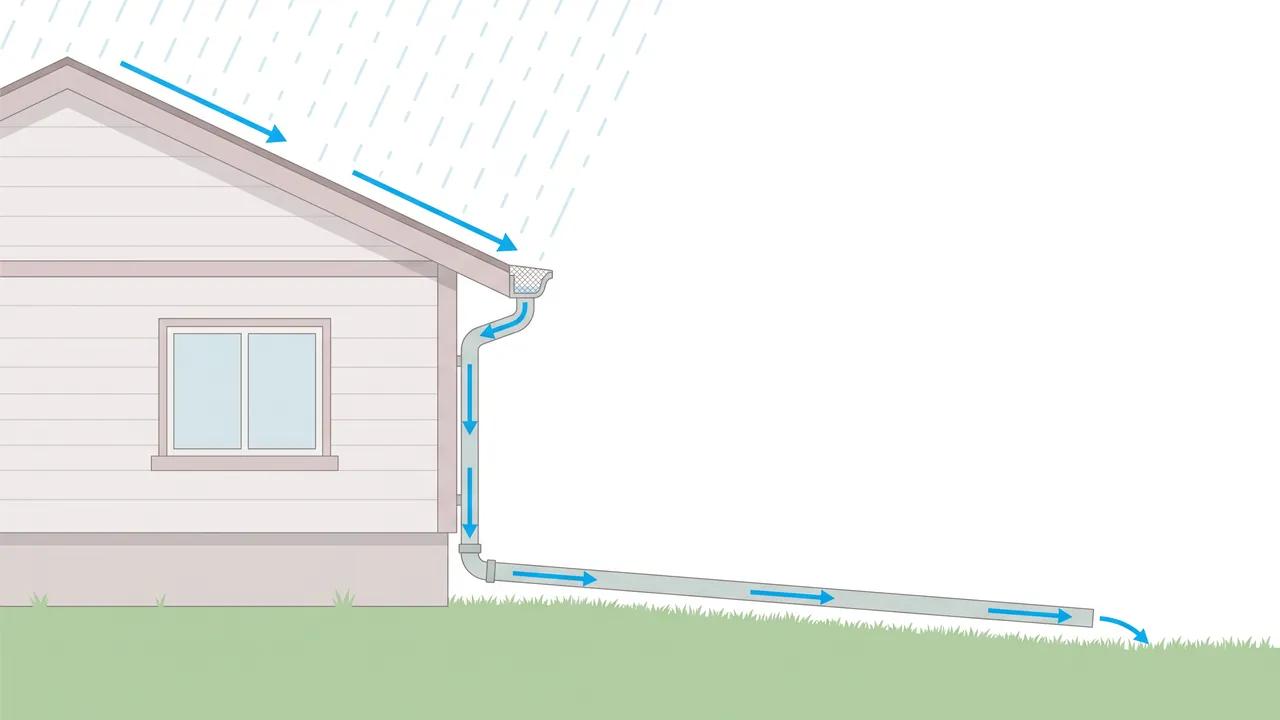
Extension also says to use screens or clean gutters regularly, so leaves do not restrict the flow. A guard keeps water moving into the downspout. The downspout then has to send it far enough away.
Is it safe to clean gutters from a ladder yourself?
Many homeowners do it, and you can do it with care. Still, ladders deserve respect. According to a CDC NIOSH post, more than 500,000 people in the U.S. are treated each year for ladder-related injuries, and about 300 die. That post is from 2017 and cites earlier federal data.
Family Handyman also notes that ladder and roof work is dangerous, especially on multi-story homes. Fewer ladder trips is one of the plain benefits of gutter guards. If you are not comfortable up high, let a crew handle it.
How does Cuevas Construction install gutter guards?
Our gutter and gutter guard installation follows the same four steps:
- On-site evaluation. We check your current gutters, roofline and drainage to see what is actually going wrong.
- System design and quote. We size a gutter and guard system for your roof. Seamless gutters are what we install by default, because fewer seams means fewer leak points.
- Clean install and flow test. We install the system, then test the water flow to confirm everything drains the way it should.
- Cleanup and maintenance tips. We clean up the job site and walk you through what basic upkeep looks like.
The boards behind your gutters matter too. On gutter jobs in Virginia Beach, we check the fascia under old gutters for rot before the new system goes up. If your fascia shows rot or water damage, see our fascia and soffit repair service. Gutters are one part of our wider exterior remodeling work.
Not sure guards are worth it for your home? We will look at your trees, roofline and drainage and give you a straight answer either way. Request a Free In-Home Estimate.
Sources (all accessed October 30, 2026):
- Virginia Department of Forestry, Fall Foliage in Virginia, weekly report of October 29, 2026
- Virginia Department of Forestry, Virginia's Forest Composition
- This Old House, Types of Gutter Guards, Explained (updated July 28, 2026)
- Family Handyman, gutter guards guide (updated June 10, 2024)
- U.S. Department of Energy, Building Science Education, Foundation Drain, Gutters, Downspouts
- Virginia Cooperative Extension, SPES-9, Stormwater Management for Homeowners Fact Sheet 1: Rooftop Redirection (Disconnection) (updated June 2024)
- CDC NIOSH Science Bulletin, It's National Ladder Safety Month (March 13, 2017)
FAQ
Yes, just less often. This Old House says guards reduce gutter maintenance but do not end it. Check them after heavy storms and clear any leaves that sit on top.
They still need some upkeep, and some types need a professional install. This Old House lists project cost, pro installation for certain types and ongoing maintenance among the drawbacks. Some styles also struggle with fine debris or very heavy rain.
This Old House says micro mesh filters fine debris such as pine needles and roof grit. It also rates brush guards well for needles, though they need regular cleaning. Standard mesh screens are weaker on needles.
Most types let rain through, but reverse curve guards can struggle. Family Handyman says that in major downpours, water can shoot over the top of a surface tension guard. This Old House names micro mesh as a durable choice for heavy rain.
The U.S. Department of Energy's Building Science Education site says more than 5 feet from the foundation, onto ground that slopes away. Virginia Cooperative Extension shows 10 feet. Extension also says to release the water on a fairly flat part of the yard, not a steep slope.
It depends on the length of your roofline and the type of guard. We give you a real number after we measure your home, not a national per-foot average.
Yes. Seamless gutters are what we install by default. Fewer seams means fewer leak points and a cleaner look along your roofline.
Some types, yes. This Old House says brush guards and foam inserts suit DIY installation, while PVC covers and micro mesh are harder to fit well. Any gutter work means ladder work, so take your time and stay safe.
Are Gutter Guards Worth It for Hampton Roads Homes?

Knocking Down a Kitchen Wall: What Homeowners Need to Know